
Guide · trend
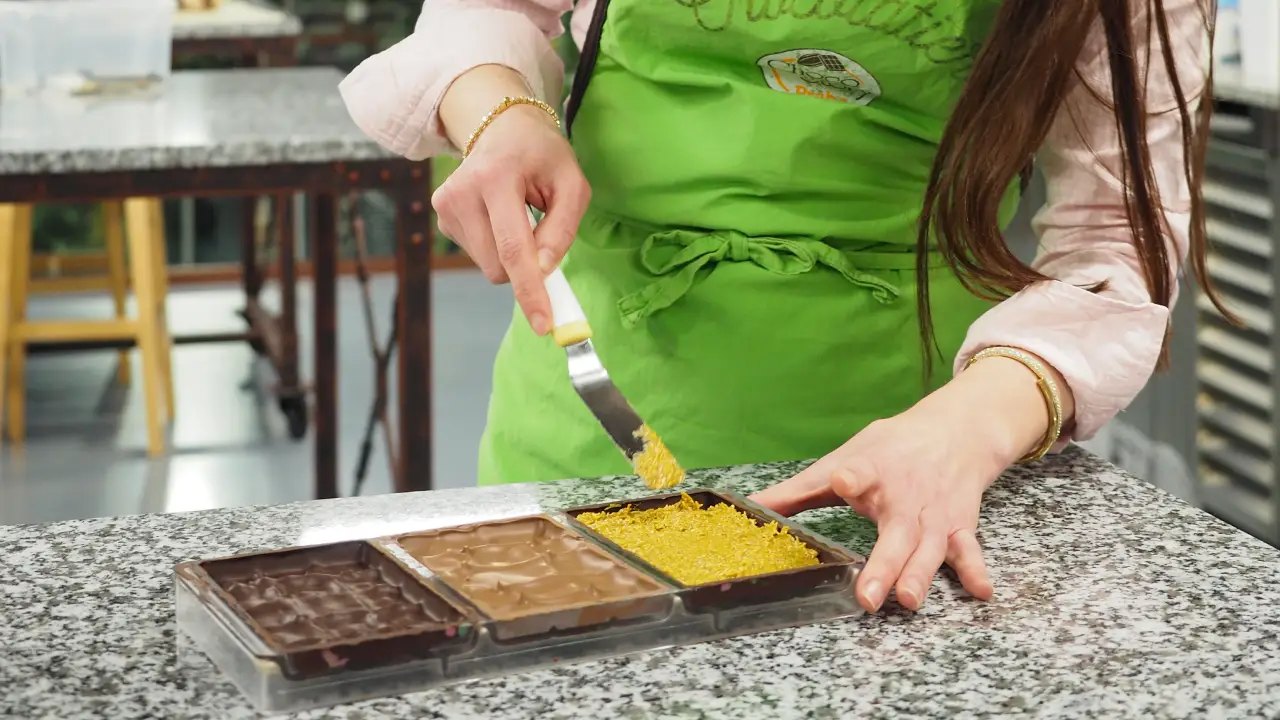
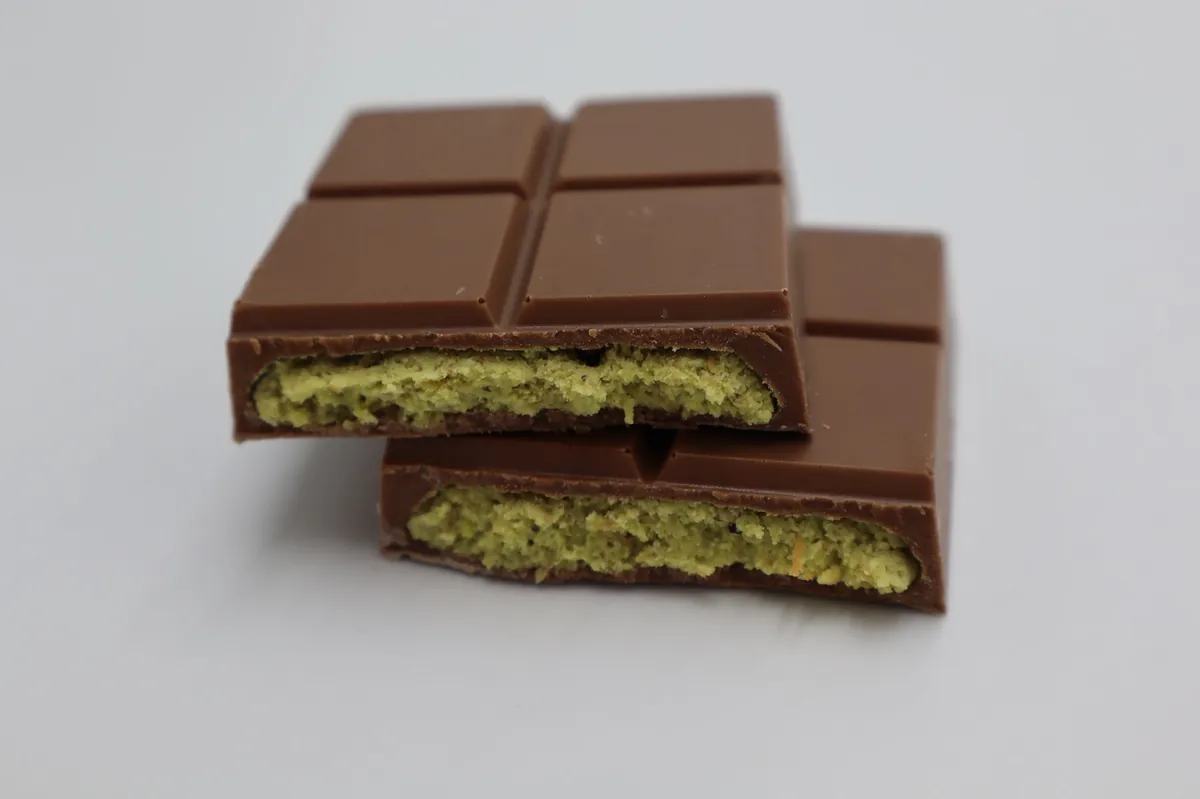
A bar of chocolate that breaks open to reveal a green pistachio filling and crunchy golden strands. Within a few months Dubai chocolate had gone round the world, and people were queuing for it in shops. So what is Dubai chocolate, why does it cost so much — and how can you make it at home for a fraction of the price?
At a glance
Dubai chocolate is a bar of milk or dark chocolate filled with pistachio cream, tahini (sesame paste) and toasted strands of kataifi pastry. Its flavour is reminiscent of kunafa — a traditional Middle Eastern dessert made from fine pastry strands, syrup and cheese. What remains of it here is mainly the crunch and the pistachio, wrapped in a chocolate shell.
The whole magic lies in the contrast: smooth chocolate, a creamy filling, and something inside that crunches with every bite.
The first Dubai chocolate was made by Fix Dessert Chocolatier in Dubai. The company was founded by British-Egyptian entrepreneur Sarah Hamouda, who, in her own words, was craving a chocolate that tasted of kunafa while she was pregnant. She came up with the bar in 2021; it was called Can’t Get Knafeh of It, and for a long time only a handful of customers in Dubai knew about it.
The turning point came in 2024, when a video of someone breaking it open on TikTok passed one hundred million views. The chocolate could only be bought in Dubai, so people started buying it up in bulk and reselling it for several times the original price. Within a few months, chocolatiers and big brands all over the world had started making it.
Three things drive the price:
And, of course, demand. Whatever goes viral sells for more.
The original recipe rests on four ingredients:
If the wrapper lists mainly sugar, vegetable fat and flavouring instead of pistachios, and puffed rice instead of kataifi, it’s merely inspired by Dubai chocolate.
Makes 2 bars (silicone chocolate bar mould, approx. 15 × 7 cm)
For the shell
For the filling
Tear the strands into shorter pieces and toast them in a frying pan with melted butter, stirring constantly, until golden — it takes 5–8 minutes. Let them cool completely; only then will they be crunchy.
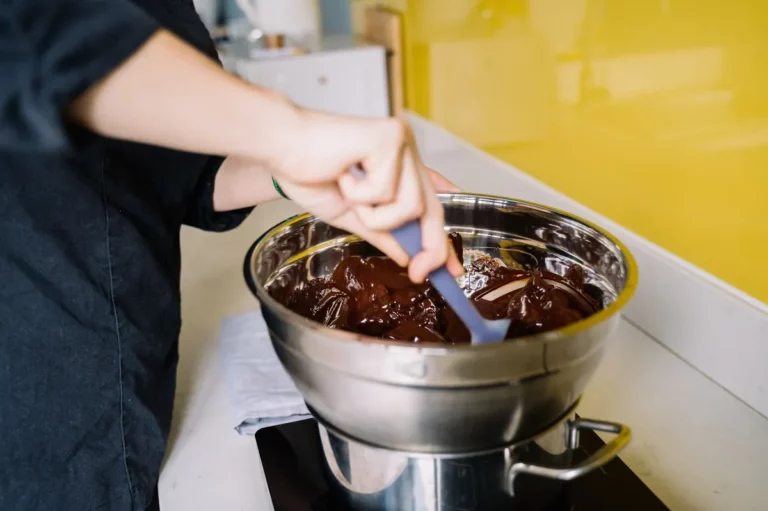
In a bain-marie or in the microwave — ideally, temper it, so that the chocolate shell will be glossy and snap when broken.
Coat the mould with about two thirds of the chocolate, let the excess drip off and put the mould in the fridge for 10 minutes.
Stir the cooled kataifi together with the pistachio cream, tahini and a pinch of salt. The filling should be thick and crunchy.
Spread the filling into the set shell, leaving a few millimetres free at the edge.
Pour over the rest of the chocolate, level it with a spatula and leave it to set in the fridge for at least an hour.
This is the moment you’ve been doing it all for.
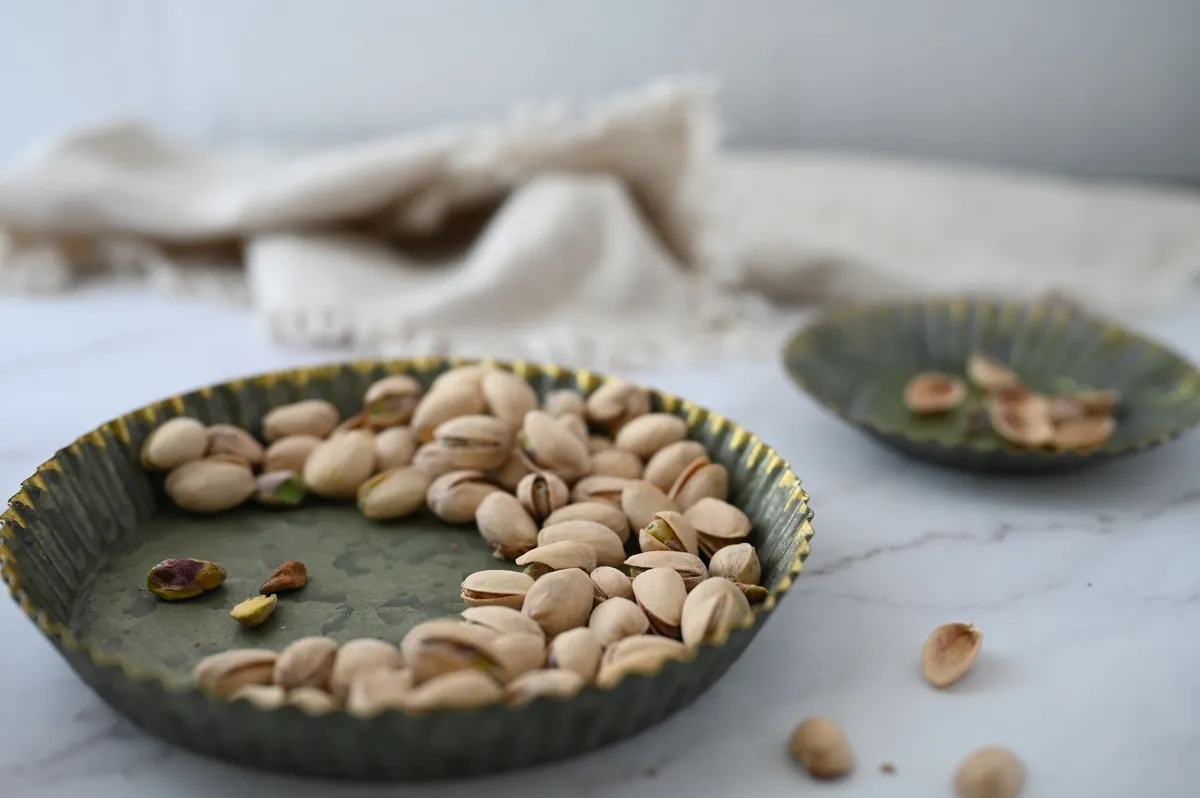
Tip: Buy pistachio cream that is as ‘pistachio’ as possible — ideally with an ingredients list that starts with pistachios, not sugar. It’s the most expensive ingredient, but the whole flavour depends on it.
If you can’t get hold of kataifi, finely crushed butter wafers or cornflakes will give you the crunch. The flavour changes a little, but the principle — cream and crunch — stays the same. The puffed rice used in cheap imitations is very much a last resort.
The original is milk chocolate, and for most people that’s a safe bet. The pistachio filling is very sweet, though, so dark chocolate of around 70% gives a bolder, more balanced result. Feel free to try a combination: a dark shell and a little white chocolate in the filling.
One video, one hundred million views
A bar that only a few people in Dubai knew about for three years became the world’s most sought-after chocolate after a single TikTok video — and pushed up the price of pistachios across the planet.
A bar of milk or dark chocolate filled with pistachio cream, tahini and toasted strands of kataifi. It was first made by Fix Dessert Chocolatier in Dubai in 2021.
Because of pistachios, which are among the most expensive nuts and keep getting pricier due to high demand; because of the handwork; and because a bar is heavier than ordinary chocolate.
Good-quality chocolate for the shell, pistachio cream, tahini, kataifi, a little butter and a silicone bar mould.
In Middle Eastern and Turkish shops, often frozen, and from some online shops selling Middle Eastern foods.
Homemade, roughly a week in the fridge in a sealed container. The kataifi gradually softens, so it’s crunchiest in the first two or three days.
At our Dubai chocolate workshop in our chocolate factory in Průhonice near Prague, you’ll make your own bar, from tempering all the way to filling.
Dubai workshop