
Cocoa · we know where it comes from
The cocoa bean is the seed that all the chocolate in the world is made from. It grows in a narrow belt around the equator, on a tree that is sensitive both to cold and to direct sunlight. Let’s look at what cocoa beans are, which kinds of cocoa tree exist, and the journey that turns bitter seeds into chocolate.
Species
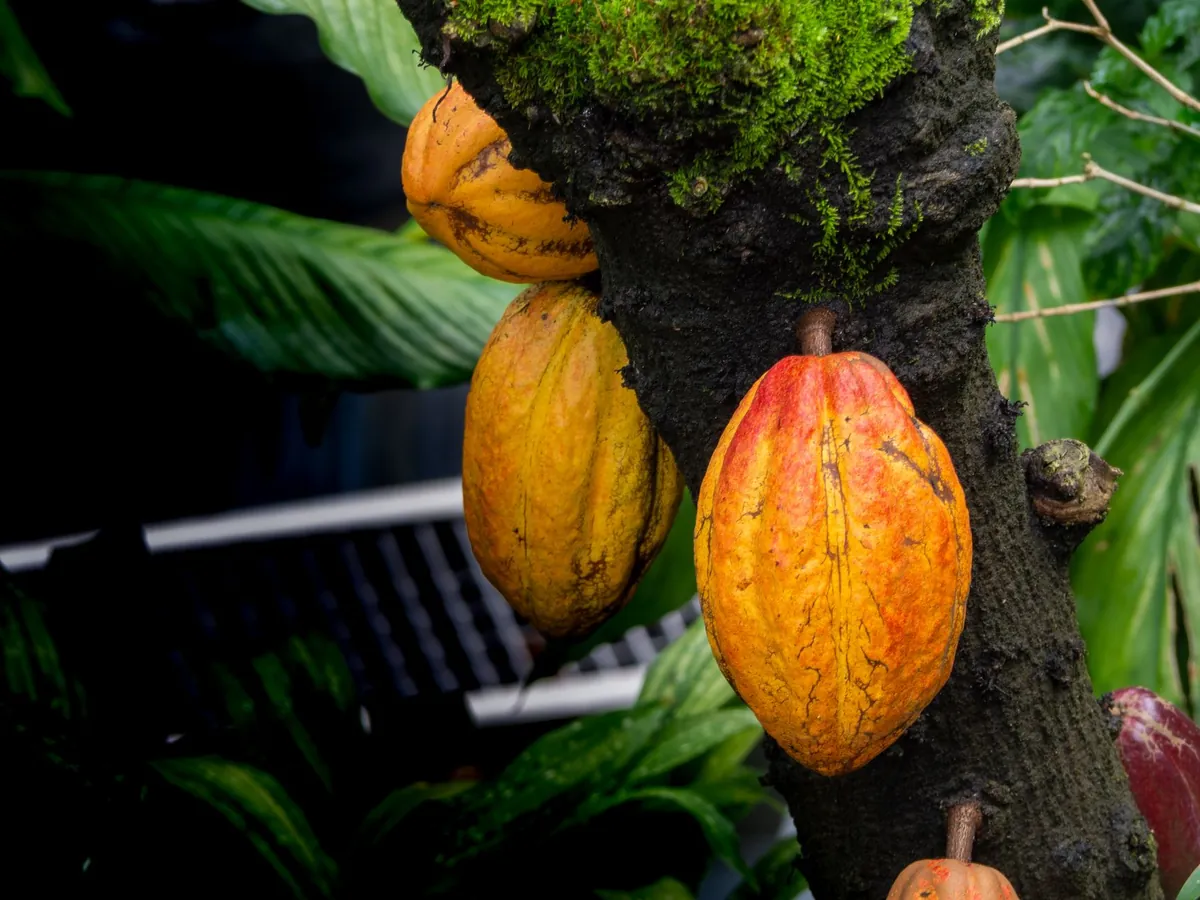
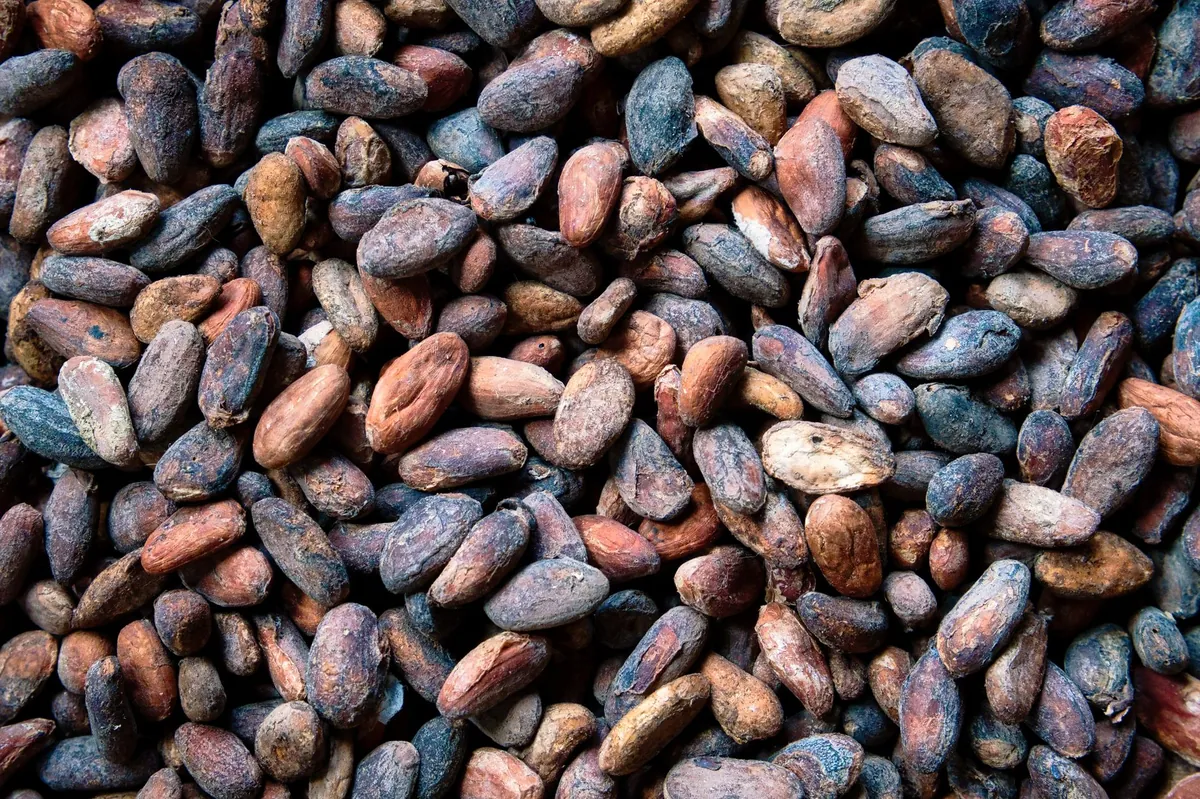
Theobroma cacaoL. — “food of the gods”Cocoa beans are the seeds of the cocoa tree’s fruit. The pods grow straight from the trunk of the tree — a single pod contains 16 to 60 seeds, and they are harvested twice a year. Raw beans are very bitter. That actually works in our favour: monkeys don’t like the taste. Only fermentation and roasting turn them into the raw material we know as chocolate.
Today cocoa is grown in 45 countries around the world. All of them lie between the Tropics of Cancer and Capricorn, because the cocoa tree needs a hot, humid climate. It is very sensitive to cold and grows only at altitudes of 0 to 800 metres. It also can’t tolerate direct sunlight, so it needs the shade of taller trees. In the wild it can grow up to 10 metres tall, while a cultivated cocoa tree on a plantation stays under 3 metres.
accounts for around 70% of world production. It grows almost everywhere, especially in West Africa. Its cocoa isn’t very aromatic, so it is rarely used for fine chocolate.
a variety from Belize that may descend from the first cocoa trees cultivated by the Maya more than 2,000 years ago. It grows only in Latin America and makes up just 5% of world production. It is prone to disease and therefore demanding to grow, but chocolate makers prize it for its unique flavour.
a cross between Forastero and Criollo. It combines some of Criollo’s flavour qualities with Forastero’s hardiness.
On the Chocotopia plantations in Mexico’s Yucatán, we grow cocoa trees of the Criollo type: we put quality before quantity.
the pods are picked by hand and split open, and the seeds are taken out together with the pulp.
the beans ferment for roughly 5–7 days. This is where the foundation of the future flavour is laid.
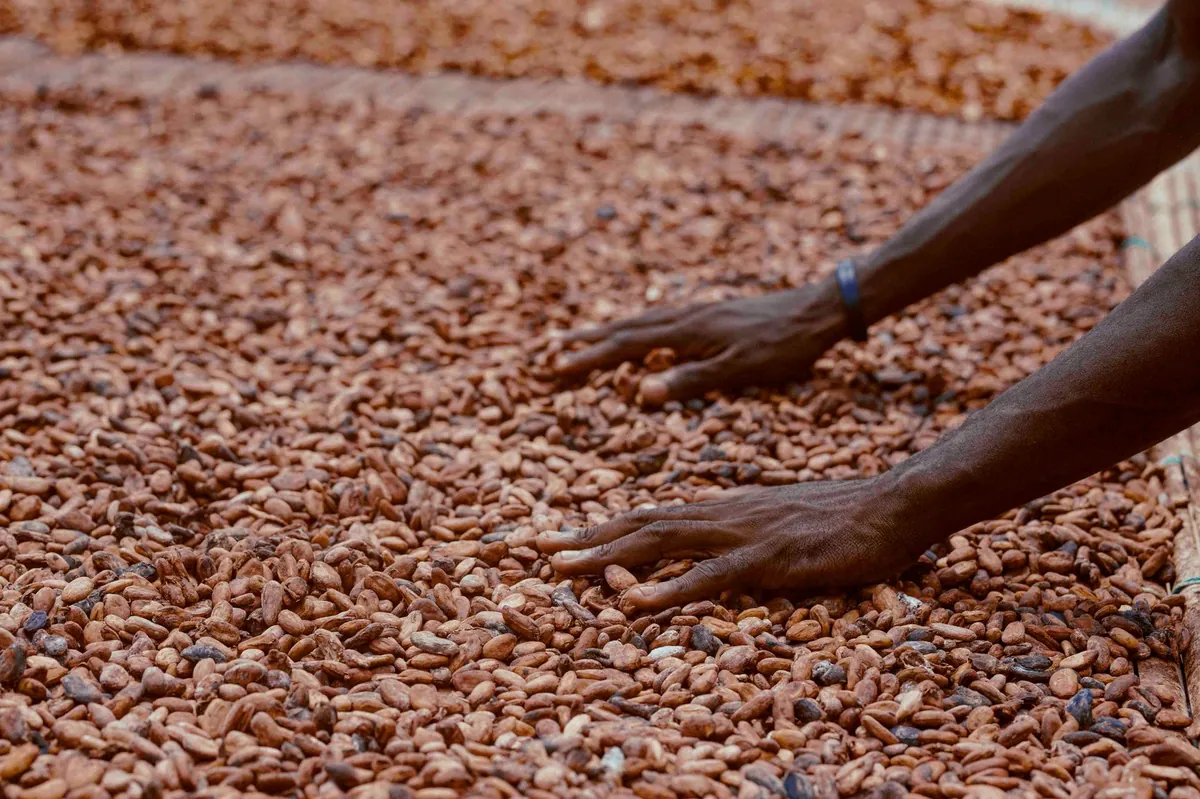
the beans are dried in the sun to remove moisture so that they can be transported.
heat brings out the aroma, and the beans lose some of their bitterness.
once the shell is removed, what remains are cocoa nibs.
the nibs are ground into cocoa mass, which is separated into cocoa butter and cocoa powder.
long mixing and precise temperatures give chocolate its smoothness and gloss.
The scientific name of the cocoa tree is Theobroma cacao L. In Greek, theos means god and broma means food — so the name means ‘food of the gods’. The abbreviation L. refers to Carl von Linné (Linnaeus), the Swedish naturalist who laid the foundations of modern botanical and zoological nomenclature and described over 6,000 plant and 4,400 animal species. He is the only naturalist for whom a single letter is enough.
The word ‘cocoa’ itself comes from cacahuatl, a word in Nahuatl, the language still spoken by more of Mexico’s indigenous people than any other.
In the 15th century, cocoa beans were so precious that the Aztecs used them as currency. Everything had its price in beans: a rabbit cost 10 cocoa beans, a turkey 40.
The first cocoa trees were cultivated by the Maya, and later the Aztecs, around 2500 BC in Mexico. Europeans then took the trees abroad and established plantations in Venezuela, Ecuador and Brazil. Cocoa consumption in Europe kept growing, so in the 19th century plantations were added in Asia and Africa — Côte d’Ivoire is still the world’s largest exporter of cocoa today.
Although cocoa growing is widespread, world production is under threat. Experts say there could be a cocoa shortage by 2050. On one side are the fragility of cocoa trees, climate change and pressure for ever lower prices; on the other, rapidly growing chocolate consumption in Asia, especially in India.
That’s why it’s worth eating quality chocolate — it does good for your health and for the planet. At Chocotopia, we care about the environment and about the conditions our Mexican farmers live in. Good natural conditions and careful care for the people who work for us — that’s our recipe for quality chocolate.
Yes, but raw beans are very bitter and hard. They are usually eaten roasted and crushed, as cocoa nibs.
The powder only appears at the end of the journey: the bean is fermented, roasted, ground and partly defatted. Cocoa butter is the fat that is separated off in the process.
A single pod contains 16 to 60 seeds, and they are harvested twice a year.
The most highly prized is Criollo, though it makes up only about 5% of world production. Criollo is exactly what we grow on our plantations in Mexico.
Follow the whole journey from bean to bar at our chocolate factory in Průhonice near Prague.
Factory tour
1 Nov – 6 Dec · Wednesday – Sunday
25 chocolate surprises you decorate yourself. The factory tour is included.
10% off with code until 15 Nov
Choose a datefrom CZK 750