
Guide · ingredients
A brown powder that looks like cocoa, smells a little like caramel and is often passed off as cocoa in recipes. But carob is a completely different plant, with a different flavour and different properties. As chocolatiers, we’ll tell you where carob can stand in for cocoa — and where it can’t.
At a glance
Carob, also known as St John’s bread, is the fruit of the carob tree (Ceratonia siliqua) — an evergreen tree that grows all around the Mediterranean. Its fruits are long brown pods, 10 to 30 centimetres long, with sweet pulp and hard seeds.
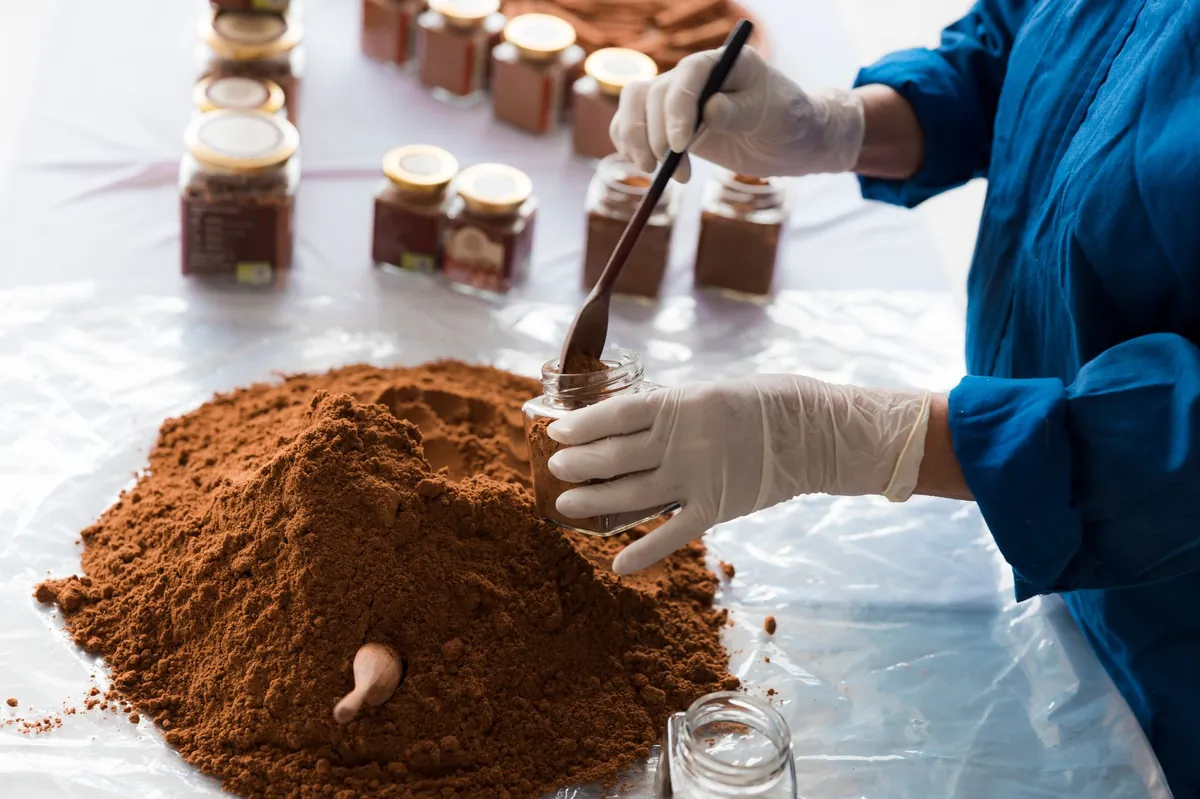
The pods are dried, the seeds removed, and the pods roasted and ground into a fine powder. This is sold as carob powder and used much like cocoa.
But it has nothing to do with cocoa. The cocoa tree grows in the tropics near the equator, and chocolate is made from its seeds — cocoa beans. The carob tree is a Mediterranean tree, and carob is made from its pods.
Carob seeds are hard and small, and in ancient times they were used as weights for weighing precious stones. The Greek word for a carob seed is kerátion — and that’s where the word carat comes from.
Cocoa is bitter and intense; carob is naturally sweet, with notes of caramel and dried dates. It is only distantly reminiscent of chocolate.
Cocoa contains both, carob neither. That’s why it is also used to make treats for dogs, for whom the theobromine in chocolate is dangerous.
Cocoa contains cocoa butter; carob has only very little fat.
Without sugar, cocoa is bitter; carob is sweet on its own, because the pulp of the pods contains plenty of natural sugars.
Thanks to cocoa butter, chocolate made from cocoa melts on the tongue and can be tempered. Carob doesn’t work like that: ‘carob chocolate’ needs a different fat and behaves differently.
Sweet, mild and a little like caramel or dried fruit. Anyone expecting the taste of dark chocolate will be disappointed — anyone who isn’t will be pleasantly surprised. Carob lacks the bitterness and depth that fermentation and roasting of the beans give cocoa. It has its own milder, sweeter flavour.
Carob makes most sense where, for whatever reason, you don’t want cocoa:
Carob seeds have one more use that you come across more often than you might think: they are used to make the thickener E 410 — locust bean gum, which you’ll find in ice cream, yoghurts and sauces.
Carob burns easily, so keep an eye on the temperature and time when baking.
Honestly: not quite. Carob is a good ingredient in its own right, but it won’t become chocolate. It lacks the cocoa butter that gives chocolate its gloss, snap and melt-on-the-tongue texture, as well as the bitterness and aroma of roasted cocoa beans.
If you’re looking for chocolate with no added sugar, you don’t need to turn to carob for that — there is chocolate sweetened with natural fibre instead of sugar. And if you’re looking for something caffeine-free, carob really is the right choice.
The bread of St John
According to tradition, John the Baptist lived on carob pods in the desert. That’s why carob is still called St John’s bread today.
A powder made from the dried and ground pods of the carob tree, a Mediterranean tree. It is also known as St John’s bread. It has nothing to do with cocoa.
Carob is naturally sweet, has no caffeine or theobromine and contains very little fat. Cocoa is bitter and contains caffeine, theobromine and cocoa butter.
Sweet, caramel-like, a little like dried dates. It is only distantly reminiscent of chocolate.
In baking instead of cocoa in a 1:1 ratio with less sugar, as a drink in warm milk, or in porridge and smoothies.
Yes. Carob contains no theobromine, which is why it is used to make treats for dogs. Chocolate, on the other hand, is toxic to dogs.
Our Sweet Fiber chocolate is sweetened with natural fibre from chicory root — and it’s still real chocolate made from cocoa beans.
Sweet Fiber chocolate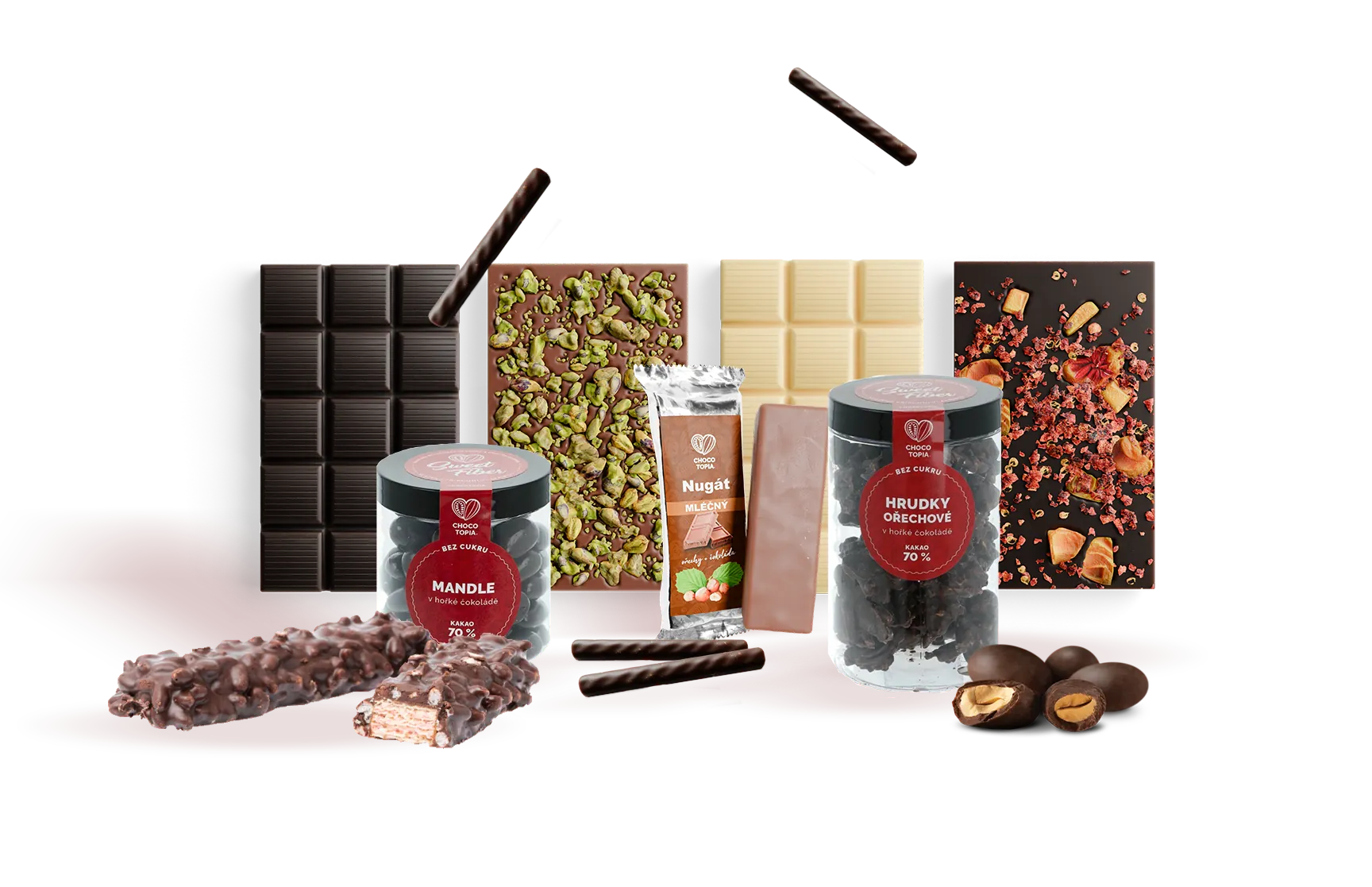
1 Nov – 6 Dec · Wednesday – Sunday
25 chocolate surprises you decorate yourself. The factory tour is included.
10% off with code until 15 Nov
Choose a datefrom CZK 750