
Guide · confectionery
A smooth nutty paste that melts on the tongue — that’s how most Czechs picture nougat (in Czech, ‘nugát’ means the hazelnut-and-chocolate paste you may know as gianduja). In France or Italy, though, you’ll be served something completely different under that name: a white, chewy sweet made with honey and almonds. We’ll explain which nougat is the ‘real’ one and what gianduja is, and show you how to make hazelnut nougat at home.
At a glance
Nougat is a confectionery mass made from sugar or honey and roasted nuts — most often hazelnuts, almonds or pistachios. The word comes from the Occitan pan nogat, meaning ‘nut bread’.
But one word hides two completely different sweets — and that’s exactly why there’s so much debate about ‘real nougat’.
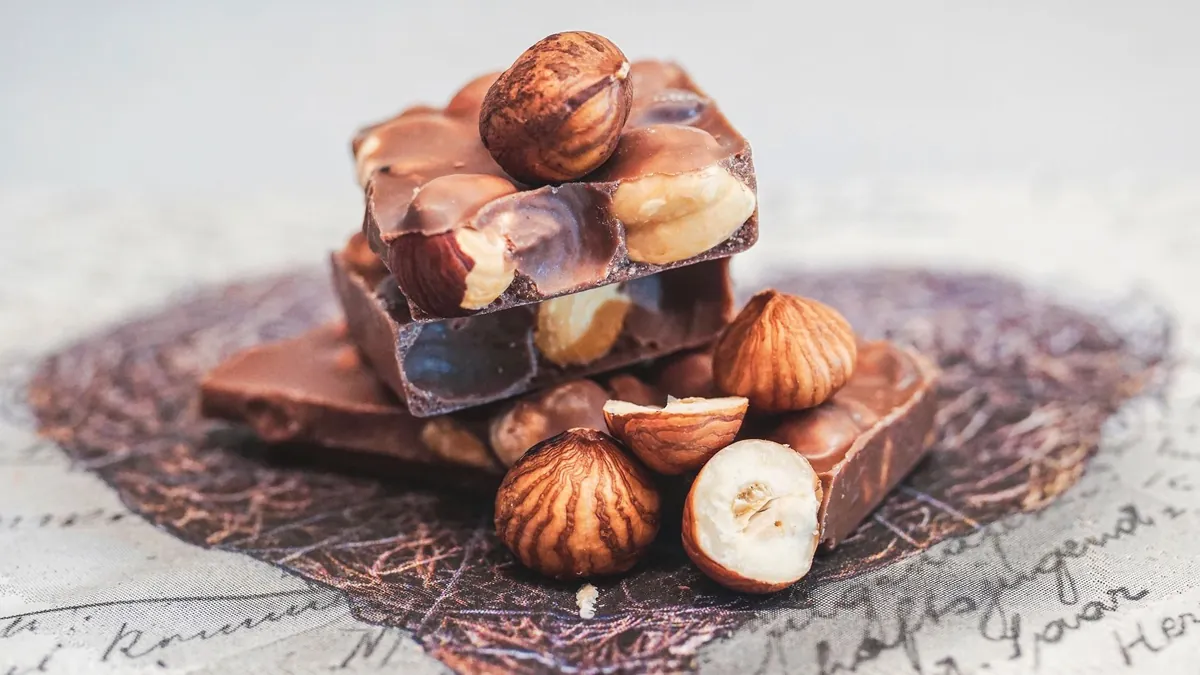
Finely ground roasted hazelnuts or almonds mixed with sugar and chocolate or cocoa. Smooth, creamy, it melts on the tongue. You’ll find it in boxes of chocolates, as a filling in wafers and as bars on its own.
Whipped egg white with honey and sugar, into which whole roasted almonds, hazelnuts or pistachios are folded. White, and either chewy or hard. In France it’s Montélimar nougat, in Italy torrone, in Spain turrón.
So which one is the real one? Both — each in its own country. Historically, white nougat is the older: the first mention of Italian torrone dates from 1441 in Cremona, where it was served at the wedding of Francesco Sforza. In Montélimar in France, the first nougat factory opened at the end of the 18th century.
But when Czechs say ‘real nougat’, they usually mean hazelnut nougat with a high share of nuts — not the kind where sugar and vegetable fat play the main role.
Gianduja (pronounced jan-DOO-ya) is Italian hazelnut nougat: a blend of chocolate and finely ground hazelnuts from Piedmont, usually around 30% hazelnuts. It is in fact the direct ancestor of what Czechs call nougat.
According to tradition, gianduja was born in Turin at the beginning of the 19th century, when Napoleon’s Continental Blockade made cocoa more expensive. Turin’s chocolatiers started ‘stretching’ it with hazelnuts, which Piedmont had in plenty — and discovered that the result tasted even better than chocolate on its own.
It was named after Gianduja, a jolly Turin carnival character from the commedia dell’arte. In 1865 the Turin company Caffarel began making it into small pralines shaped like an upturned boat — gianduiotti — which are still made there today.
And one more thing everyone knows: Nutella is essentially a spreadable gianduja.
For a tin of approx. 15 × 15 cm
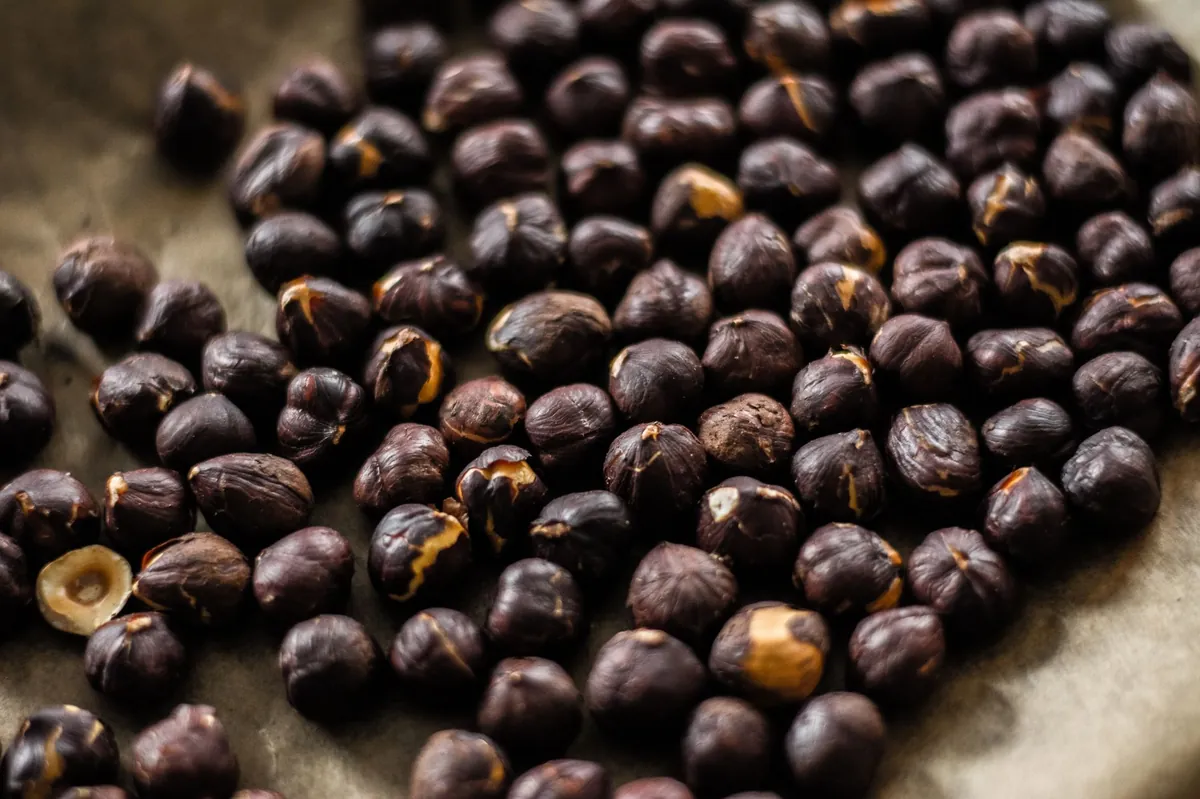
Roast the hazelnuts in the oven at 160 °C for about 10–12 minutes, until they smell fragrant and their skins start to crack.
Skin them. While they’re still warm, wrap them in a tea towel and rub — most of the skins will come off.
Grind them into a paste. Blend them in a powerful blender for several minutes. At first they’ll be like flour, then they’ll release their oil and turn into a smooth, thick paste. Don’t rush — this is the whole secret.
Add the sugar and salt and keep blending until the sugar has completely dissolved and the paste is smooth.
Stir in the melted chocolate — melted in a bain-marie, to no more than 45 °C.
Pour into the tin lined with baking paper and leave to set in the fridge for at least 2 hours.
Cut into pieces with a sharp knife dipped in hot water.
Variations:
The same nut paste as in the recipe above, just with less chocolate and a spoonful of oil or milk, so that it stays spreadable. Keep it in a sealed jar at room temperature — in the fridge it will set hard.
Hazelnut nougat keeps for several weeks somewhere cool and dry, ideally at 15–18 °C. In the fridge it hardens and a white bloom may appear on it. Protect white nougat made with honey from moisture, otherwise it turns sticky.
When cocoa was stretched with hazelnuts
Napoleon’s blockade was meant to take cocoa away from Turin. Instead, it gave the city gianduja, gianduiotti and, in the end, Nutella too.
A confectionery mass made from sugar or honey and roasted nuts. In the Czech Republic the name is mainly used for a nut paste with chocolate; in France and Italy for a white sweet made with honey and almonds.
In the Czech Republic, hazelnut nougat with a high share of roasted hazelnuts or almonds, not sugar and vegetable fat with flavouring. In France, real nougat is the white one from Montélimar.
An Italian nougat made from chocolate and hazelnuts from Piedmont. It was born in Turin in the 19th century and is the forerunner of Nutella.
Grind roasted and skinned hazelnuts into a paste, add icing sugar and melted chocolate, pour into a tin and leave to set in the fridge.
Just like nougat, only with less chocolate and a spoonful of oil or milk, so that it stays spreadable.
Hazelnut and almond nougat with milk chocolate, plus our Sweet Fiber nougats with no added sugar — in white, milk and dark chocolate.
Our nougat